Key takeaways
- Keep the refrigerator at about 37 to 40 degrees Fahrenheit and the freezer at 0.
- Dirty coils and blocked vents are the most common simple causes of warm food.
- Frost in the freezer often points to the defrost system or a door seal.
- Water on the floor can come from the drain, the water line or the ice maker.
Warm food and long run times
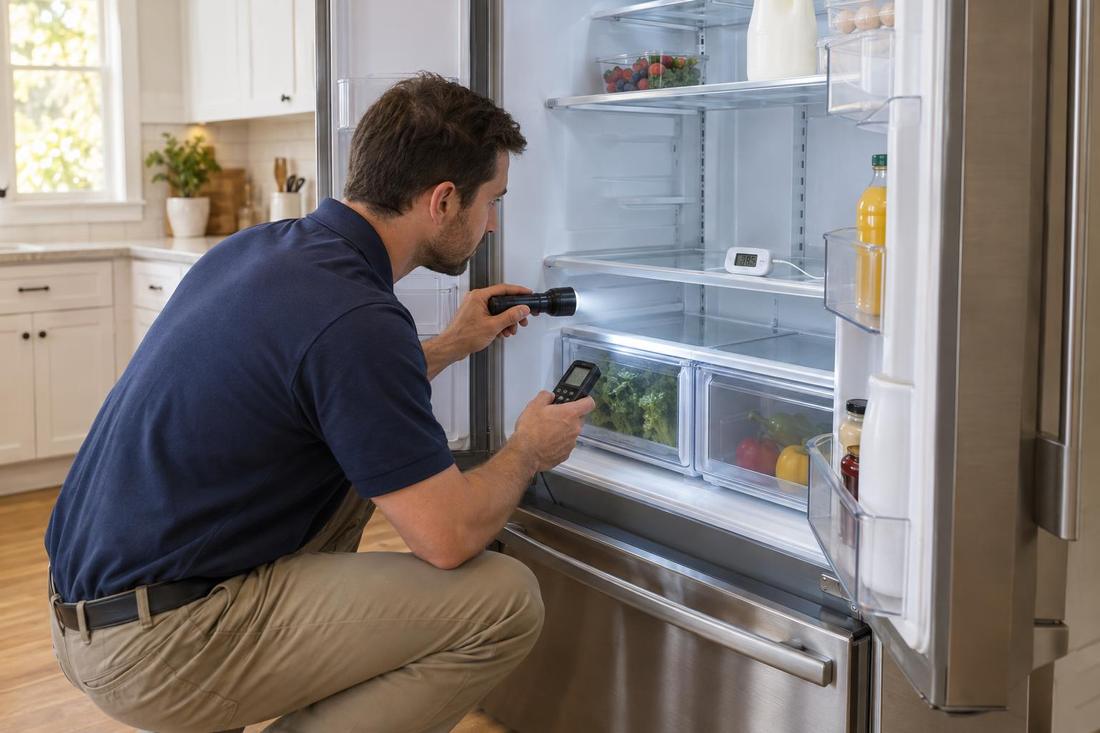
If the fridge runs all the time but the food is warm, start with the simple things: set the temperature, clear the vents inside, check the door seal and pull the unit out to look at the coils. Dust on the condenser coils makes the system run hot.
If the freezer is cold and the fridge is warm, airflow or a damper is likely, and a technician can test it quickly.
Frost and ice buildup
A freezer that builds frost on the back wall or around the ice maker may have a failed defrost heater, a bad sensor or a door that is not sealing. Frost insulates the evaporator and blocks airflow, which makes the fridge warm even though the freezer seems fine.
A seal check with a strip of paper is an easy first test.
Noises worth checking
A hum or low buzz is often normal, and clicks as the unit cycles are normal too. A loud rattle, a squeal or a grinding sound usually points to a fan, a fan blade hitting frost or a compressor that is struggling.
Note when the sound happens and share it with the technician.
Water and leaks
Water inside the fridge can come from a clogged defrost drain. Water under the unit can come from the drain pan, the water line to the ice maker or the dispenser. A slow leak can ruin a floor before you see it, so check behind the unit when you can.
If water reaches electrical parts, unplug the fridge and call.
Official sources and further reading
- ENERGY STAR refrigerators and freezers
- U.S. Department of Energy Energy Saver
- Association of Home Appliance Manufacturers
These are independent organizations. Links open in a new tab.
Quick answers
When should I move food out?
If the refrigerator stays above 40 degrees Fahrenheit for more than a couple of hours, move perishable food to a cooler with ice, and follow food safety guidance on what to keep.
Is a noisy fridge always failing?
No. Some noise is normal. A change in the sound or a loud new noise is the sign to have it checked.