Key takeaways
- Clean the filter and spray arms often.
- Scrape dishes but do not rinse them to a shine.
- Check the drain hose and the disposal connection when water stays.
- Stop a leaking dishwasher and shut off the water.
Dishes that come out dirty or cloudy
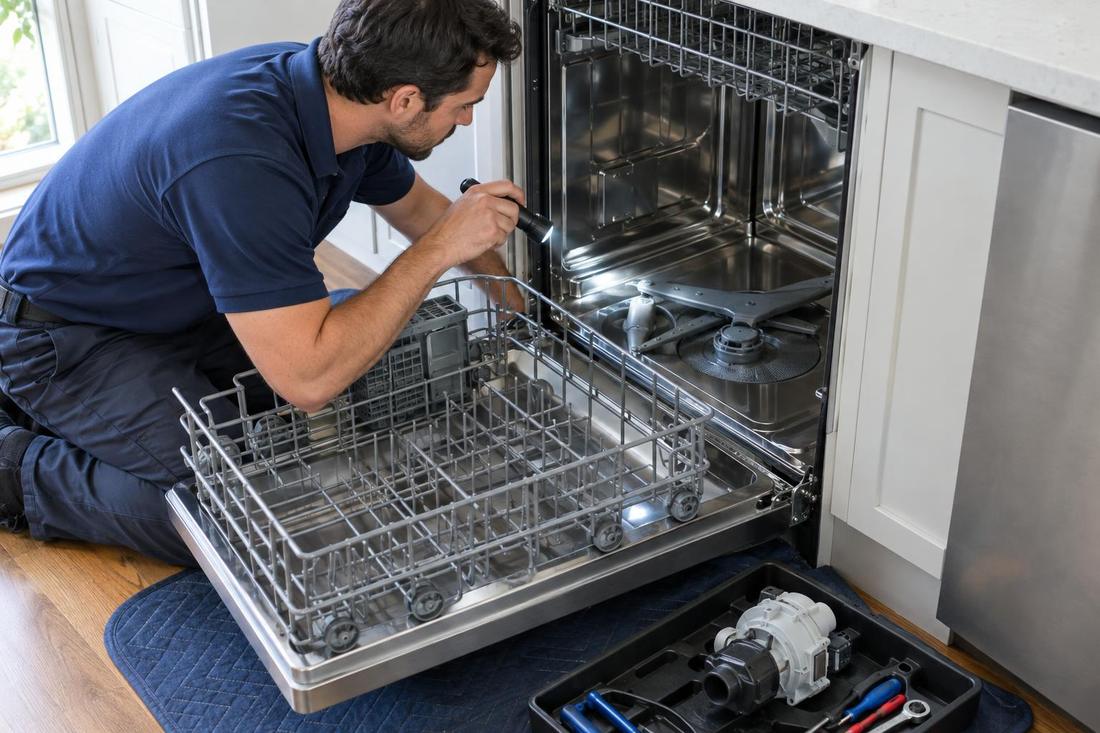
A clogged filter, spray arms with blocked holes or low water temperature can leave food and film behind. Remove and rinse the filter, check the spray arm holes and run the tap until the water is hot before starting.
Hard water film can be cleared with a cleaner made for dishwashers.
Standing water
Water that stays in the bottom often points to a clogged filter, a kinked drain hose or a drain pump issue. If the dishwasher connects to a garbage disposal, a knockout plug that was never removed can block it.
A high loop or an air gap in the drain line keeps sink water from coming back.
Leaks
A leak can come from the door gasket, a loose hose clamp, the pump seal or the inlet valve. A cracked tub or spray arm can also splash water out. Stop the cycle and turn off the water until the cause is found.
A slow leak can damage cabinets and floors before you notice.
Will not start or latch
If the dishwasher will not start, check that the door latches fully, that the power is on and that the control is not locked. A failed latch or door switch is a common cause.
Read any error code from the display and share it with us.
Official sources and further reading
- ENERGY STAR dishwashers
- Association of Home Appliance Manufacturers
- U.S. Department of Energy Energy Saver
These are independent organizations. Links open in a new tab.
Quick answers
Should I rinse dishes before loading?
Most modern dishwashers do better with scraped dishes, since the sensors and detergent expect some soil. Check the manual for your model.
How often should I clean the filter?
Many guides suggest monthly, and sooner if you see debris. It takes a minute and prevents many problems.