Key takeaways
- Clean filters, seals and lint traps on a regular schedule.
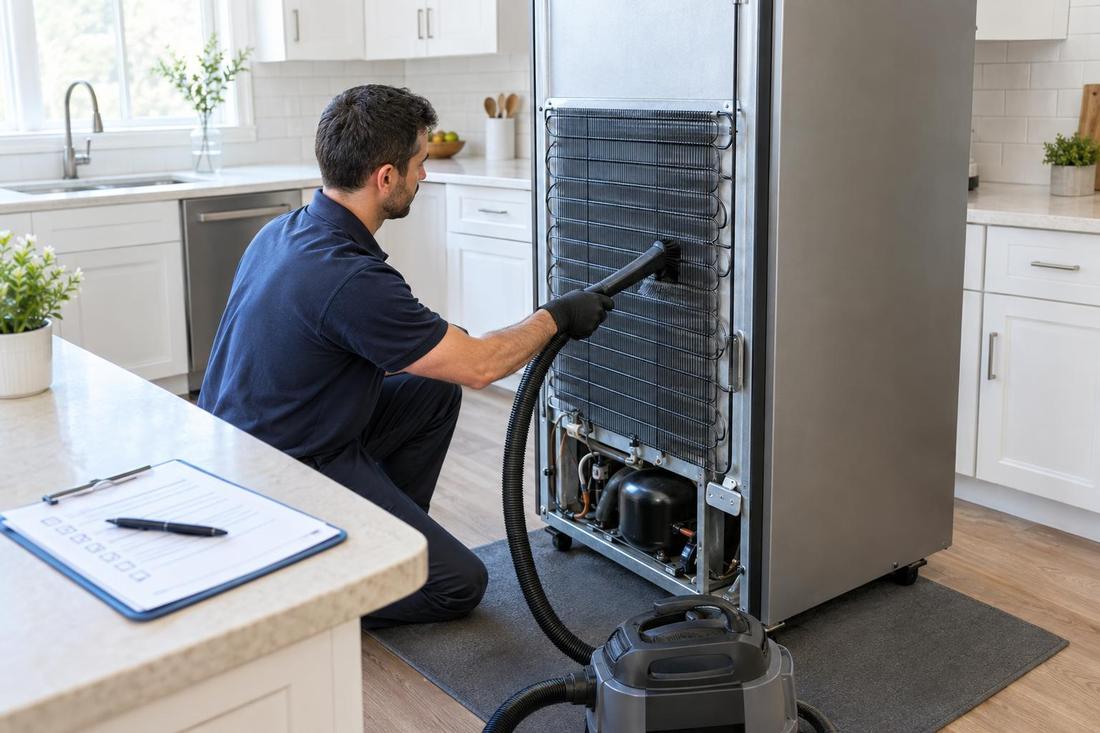
- Vacuum refrigerator coils and check door seals once or twice a year.
- Clean dryer vents yearly and wash machines on their clean cycle.
- Fix small problems early, before they grow.
Every month
Clean the dishwasher filter, wipe the washer door seal and leave the door ajar to dry, clear the range hood filter if you cook a lot and check under the sink for slow leaks. These take minutes and prevent larger repairs.
Run a washer cleaning cycle as the manual suggests.
Every season
Pull the refrigerator out and vacuum the coils and the area behind it, check the door seals and look at the drain pan. Check hoses on the washer and dishwasher for bulges and cracks.
Test the range hood lights and fan.
Every year
Have the dryer vent cleaned, check washer hoses and replace them if they look worn, test oven temperatures with a thermometer and look at gas connectors for kinks or corrosion. A tune-up visit can cover all of these in one trip.
Replace refrigerator water filters on the schedule in the manual.
Habits that help
Do not overload the washer or dryer, scrape plates before loading the dishwasher, wipe spills in the oven and keep the refrigerator vents clear. Listen for new noises and look for drips so you catch problems early.
If something changes, call before it fails completely.
Official sources and further reading
- U.S. Department of Energy Energy Saver
- ENERGY STAR refrigerators and freezers
- Association of Home Appliance Manufacturers
These are independent organizations. Links open in a new tab.
Quick answers
How often should I schedule a professional tune-up?
Many households do well with a yearly check, and busy homes and rentals may want it more often.
Do small repairs really save money?
Often yes. A seal, a hose or a filter is a small fix, while leaving the problem can damage the machine or the home.