Key takeaways
- Clean the lint filter before or after every load.
- Have the vent duct cleaned at least once a year, and more often for long runs.
- Use rigid or semi-rigid metal duct, not plastic or foil.
- Keep the run short and straight and exhaust to the outside.
Why vents matter
Lint is flammable, and a dryer vent that is packed with it traps heat in the dryer. Fire safety agencies list failure to clean dryers as a leading cause of home dryer fires. A clean vent is also the easiest way to shorten drying times.
A blocked vent can also burn out parts and increase wear on the machine.
Signs of a blocked vent
Clothes that stay damp after a full cycle, a very hot dryer or laundry room, a burning smell and lint around the exhaust cap are all signs. If the outdoor flap barely moves when the dryer runs, air is not escaping well.
If you notice any of these, stop and have the vent checked.
The right duct and layout
Rigid or semi-rigid metal duct gives the best airflow and does not trap lint the way ribbed foil or plastic does. Keep the run as short and straight as possible, with few elbows, and exhaust outdoors, not into an attic or crawlspace.
Check the dryer manual for the longest vent length allowed.
Cleaning and upkeep
Clean the lint filter every load and wash it occasionally with soap to remove the film from fabric softener sheets. Have the duct cleaned yearly, and sooner if you see the signs above.
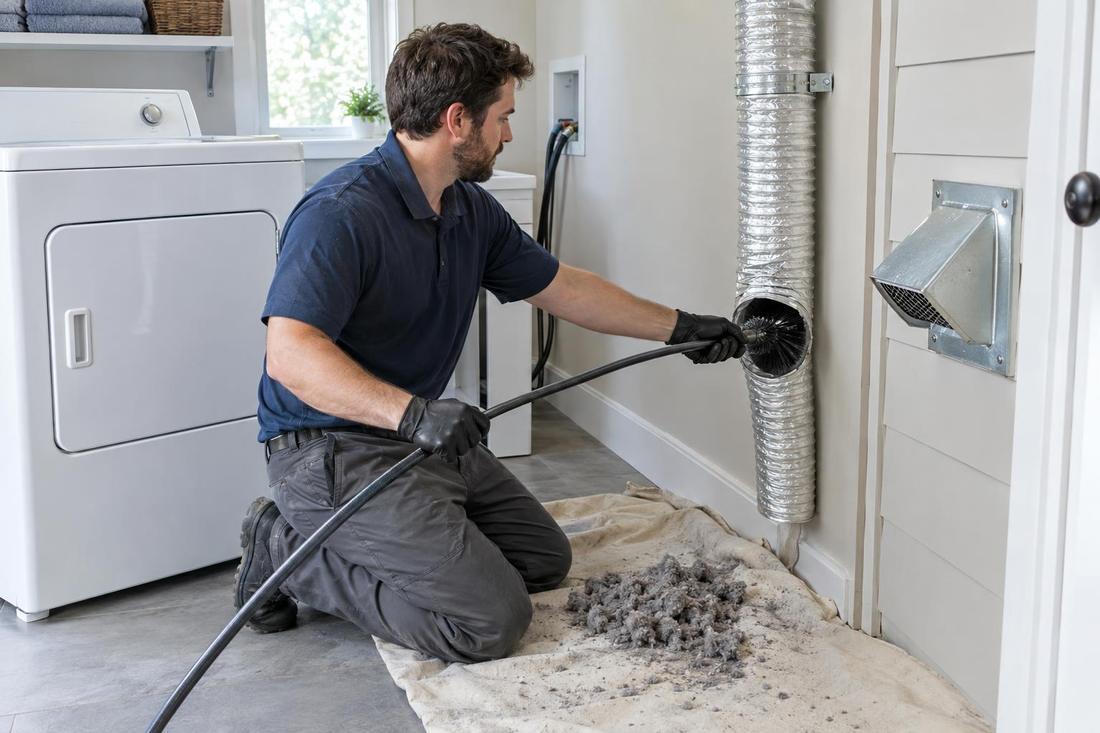
A technician disconnects the dryer, cleans the duct and checks the cap and connections.
Official sources and further reading
These are independent organizations. Links open in a new tab.
Quick answers
Can I clean the vent myself?
Some people use a brush kit, which can help on short runs. Long or hidden runs are better cleaned by a professional with the right equipment.
Is a plastic flex duct acceptable?
It is discouraged. Plastic and thin foil can sag, trap lint and burn. Metal duct is the better choice.