Key takeaways
- Choose a company that tests the appliance and explains the cause before ordering parts.
- Ask what the visit includes, how follow-up works and what happens if a part has to be ordered.
- Check the licensing and insurance rules that apply and ask for proof.
- A good technician tells you when repair does not make sense.
Start with the diagnosis
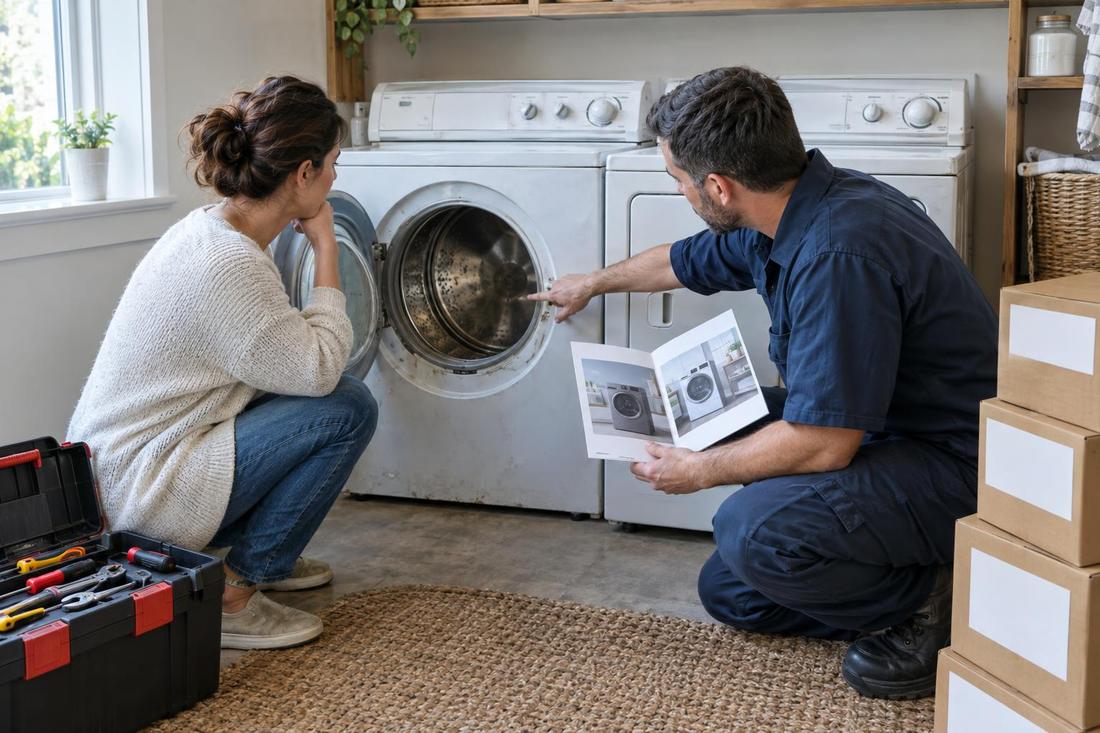
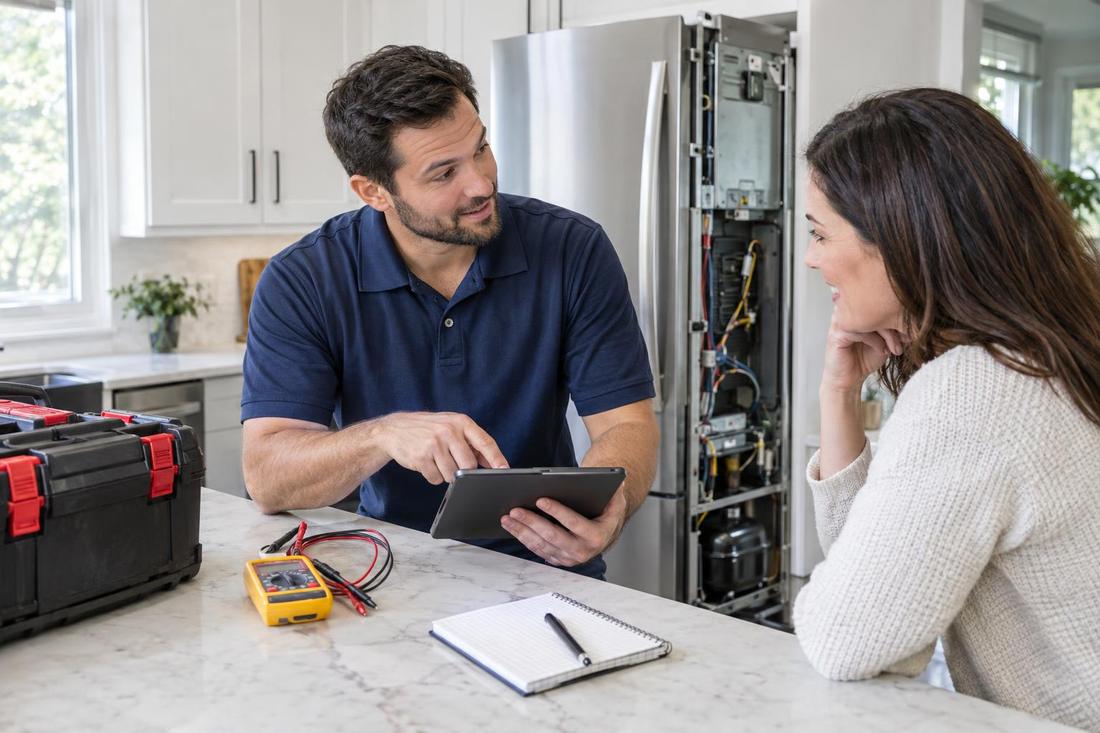
A good appliance technician does not guess. They ask what you noticed, read the model tag, test the likely causes in order and show you what failed. A quote that arrives before anyone has looked at the unit is a guess, and a guess can send you down the wrong repair.
Ask how the diagnosis works and what you will know when it is done.
Ask about parts and follow-up
Many repairs need a part, and some parts take days to arrive. Ask whether the technician carries common parts, how they confirm the right part before ordering and what happens on the return visit. A clear answer saves a lot of frustration.
Ask how long a repair is supported once it is finished.
Check licensing and insurance
Rules for appliance repair and for work that touches gas, plumbing or electrical connections vary, so ask what applies to your job. Ask for proof of liability insurance and, if the company has employees, workers compensation. A reliable company shares this without fuss.
You can look up contractor licenses through the state licensing board.
Expect honesty about repair or replace
A good technician will tell you when a repair is not worth doing, and will explain why in terms of the failed part, the age and the condition of the appliance. If every answer is a repair, ask for a second opinion.
Ask for the model and serial number to be written on the paperwork so you have a record.
Official sources and further reading
- Tennessee Board for Licensing Contractors
- Better Business Bureau
- Association of Home Appliance Manufacturers
These are independent organizations. Links open in a new tab.
Quick answers
Should I get more than one opinion?
For a large repair or an older appliance, a second opinion is reasonable. Compare what was tested and what was found, not only the recommendation.
Do I need to be home during the visit?
It helps at the start and at the end. A technician may need access, a quick answer on options and a walk-through of the result.